Relationships

A Christian & A Trans* Friend

It’s great that you can still be friends with them.

Maybe you should be taking a boy with you.

Isn’t that weird?

Just under five years ago, I became friends with a chick at college who is now a dude I’m still friends with. Bryson and I bonded over his posters of Obama and Matchbox Twenty hanging in his college room during the first week that we moved in. We remained firm friends who went to the movies, ate chocolate, studied and enjoyed each other’s company.

However, towards the middle of second semester, Bryson disappeared from college. No one knew where he was, and I was worried. I called everyday with no answer. Until, at a fateful 2am, Bryson appeared online and replied to my message. Bryson told me that he was struggling with his gender identity and that at least some part of him wanted to be a guy. He felt confused and just didn’t know what to do. He apologised profusely for telling me.

How did I respond?

I didn’t run around and quote the Bible. I didn’t tell Bryson that he was going to hell. I didn’t line up my pitchfork.

Why…? Christians are called to love others in the midst of their pain and suffering. What my friend needed was someone to listen. I had spent three months worried about him, and he had being going through tough stuff alone.

What he needed was a friend. A friend who didn’t dismiss the significance of his suffering because it wasn’t something the Christian community sees as God’s plan.

A friend loves at all times, and a brother is born for a time of adversity. ~ Proverbs 17:17

But you did tell him he’s a big trans* sinner, right?

Not that day, nor the days that followed after.

Christians need to be aware that being transgender and transitioning is a highly emotionally driven decision. Unhelpfully, I had people telling me it was great that I could still be friends with him. As if someone being trans* is a reason to stop being friends.

If Christians were to stop talking to anyone we thought were sinners, we’d talk to no-one… including ourselves.

As it is written: “There is no one righteous, not even one; there is no one who understands; there is no one who seeks God…” – Romans 3: 10-11

I still remember having a rather sad friend who was sitting on my floor [slightly intoxicated] telling me how much he hated himself. To tell Bryson that his choice is wrong, when my faith is not his own, would be for me to tell him I’d prefer the alternative path he was heading down before transitioning.

I prefer an alive Bryson to a dead friend. An all too real alternative that Christians should not forget.

A few years later we talked about identity and how my identity was in Christ; not the way others perceived me. This didn’t lead from a conversation where I presumed that Bryson had made a decision to transition into a dude, because he simply wanted others to see him that way – but one  about what made us, “us,” and where we believed our identity came from.

Christians also need to realise that the decisions that we would make are different to that a non-Christian makes. We believe in living lives for God, and should not begrudge and belittle non-Christians for not doing the same. Bryson knows the Gospel and has his own views on life.

Since, then, you have been raised with Christ, set your hearts on things above, where Christ is, seated at the right hand of God. Set your minds on things above, not on earthly things. For you died, and your life is now hidden with Christ in God. – Colossians 3:1-3

As Christians, we are called to be witnesses of Christ and to show his love.

If you actually want someone to believe that God is loving whilst being friends with someone who is trans*, then the best way to do that is to actually be a friend.

Save any recommendations for when they bring it up or decide to be a Christian. People who are trans* deserve to have such a large decision dealt with appropriately, rather than someone steamrolling them with advice that is not appropriate for where they’re at. Gender dysphoria is a legitimate psychological issue which is handled differently by each person much like the depression and anxiety that manifests alongside it. Words carry weight, and need to be spoken thoughtfully.

Let’s be clear. I love my friend regardless of the pronouns he uses, the clothes he wears and the legal documents he changed. And you should love him too.

What if I come across someone who’s trans*?

  1. Don’t run away, dodge them or ignore them. Say hi.
  2. Get to know them.
  3. Be aware that those who are trans* may have been burnt by other Christians.
  4. When they are comfortable, ask questions to understand not to argue.
  5. Use the pronouns they identify by. This is something loving to do. Much like not calling your friends names that they don’t like. Apologise for when you forget.
  6. Don’t just view them as someone to convert.

Today, Bryson has changed a lot from the chick I met in my first year. He has a new name, his ID card now matches his face, and he’s had a chest reconstruction. He’s much happier and we still go to the movies, eat chocolate and enjoy each other’s company. We talk about Christianity, we talk about transgender identity and we understand that we are two different people who still like Obama and Matchbox Twenty.

I would encourage you to listen, learn and love. Speak graciously and wisely. Pray honestly. And don’t disregard the trans* community, their feelings, their struggles and their choices, because loving them first is the most loving thing to do.

Work

Time to Quit

When I finished my undergrad I headed into a Youth Worker position that I was looking forward to. However, I soon came to realise that it was time to quit.

The job I accepted was working a 24/7 roster with children in residential care. For those of you who don’t know what residential care is, it is a care arrangement for children who have been removed from their families by the state welfare services. These kids often have aggressive behaviours and significant emotional regulation issues.

As I said, I was keen for this work. It paid, and it was challenging enough that I wouldn’t get bored. For the first four months of my job I enjoyed it. There were a few downs with clients who were just perpetually angry (and violent).

The start of my job was easy. I was able to turn down working when I had Bible study on, and to take two weeks off for mission. During university holidays, I dealt reasonably well with long shifts where I’d sleepover at work and with some of the more violent shifts. Yet when uni rolled around, the flexibility I needed slowly ebbed away.

Eventually, I began being asked to work when I already had made myself “unavailable.” I also began working with a client that was becoming increasingly violent. I was managing a full-time course load at university and was working no less that 21 rostered hours (but upward of 50 with sleepover shifts). It wasn’t until I had three weeks away from work, that I realised it was time to go.

I’m not one to shirk responsibilities I’ve taken on, irrespective of how much I like them. So why did I choose to leave?

In my previous blog post, I mentioned that we are workers for Christ. Our life is a sacrifice for God, and we must be prepared to live a life that pleases God. Our work AND lives must glorify Him.

Whatever you do, in word or deed, do everything in the name of the Lord Jesus, giving thanks to God the Father through him ~ Colossians 3:17

This means acknowledging God’s sovereignty in our jobs. We have jobs to live, and are not to live for our jobs. Jobs support us for worldly responsibilities like paying rent and feeding ourselves, but are not our purpose in life. God is.

Lord, the God of our ancestors, are you not the God who is in heaven? You rule over all the kingdoms of the nations. Power and might are in your hand, and no one can withstand you. ~ 2 Chronicles 20:6

If God is sovereign, it also means that what we do not only at work but our spare time matters to Him.

The major issue of my job was that it was pushing me towards living for work. I was being encouraged to use my time outside of work for more work, and the emotional toil of working with troubled children alongside uni was pushing my spare time further away from God.

I became less inclined to meet regularly for bible reading. I struggled to maintain relationships, not just with my Christian friends but also other (just as important) non-Christian friends. I was tired and didn’t feel like reading my Bible and felt constantly pressed for time.

Meeting regularly, loving our brothers and sisters, loving our friends and growing in God’s word are all important. It wasn’t until I stopped to breathe, that I realised I was overwhelmed by my work. My job consumed my life, and left little space for God.

What did I do?

Well, I checked my contract and gave my minimum notice for resignation. I left without a job lined up, but knowing that it was a good choice.

…there is but one God, the Father, from whom all things came and for whom we live; and there is but one Lord, Jesus Christ, through whom all things came and through whom we live. ~ 1 Corinthians 8:6


Placement Experiences

But Why Do You Believe in Equity?

Recently, a friend asked me why I thought my teaching practice should be shaped by distributive justice (equity). So this blog post is the long answer, which I couldn’t manage on a Friday night over dinner.


Two students.

One from a family whose parents completed high school and obtained a tertiary education, they have books in their house, the student is helped with his homework which includes the reading of an age-appropriate book for English.

One from a family whose mother completed high school and works night shifts and a father whose literacy is where he left it in high school at the age of 15. His father tries his best to help with his homework but the book requires him to sound out the words aloud before he can help his child.

Which one is most likely to finish their homework to a better standard?

No one is equal in education. 

The answer to this? Equity.

Equity acknowledges that people are inherently unequal. Students are born with characteristics like creativity or an affinity for algebraic equations. Some are born with impairments, or disabilities. Others, lag behind academically. Others have been born into high cultural capital families.

So what is equity exactly? Well here’s the layman’s definition:

Equity is the provision of resources to those who need them in order to create a level playing field.

Equity perpetuates inequality to create equality. (Woah). It discriminates on the basis of need to enable fairness of chances in succeeding.

In education this can take many shapes and forms. It can be the employment of Teacher’s Aides, diversifying learning activities or changing expected learning outcomes. Really, it’s being aware of student’s weaknesses, strengths and diverse backgrounds then acknowledging that these will impact the learning experience of every single student in a different way.

As a classroom teacher, I will never be able to provide the funding needed to employ a TA, purchase specialist resources or a far reaching educational program. However, I can differentiate my teaching. This uses all that I know (and can find out) about the students in my class and then alters my pedagogy (everything teacher’s do) to cater for the needs identified.

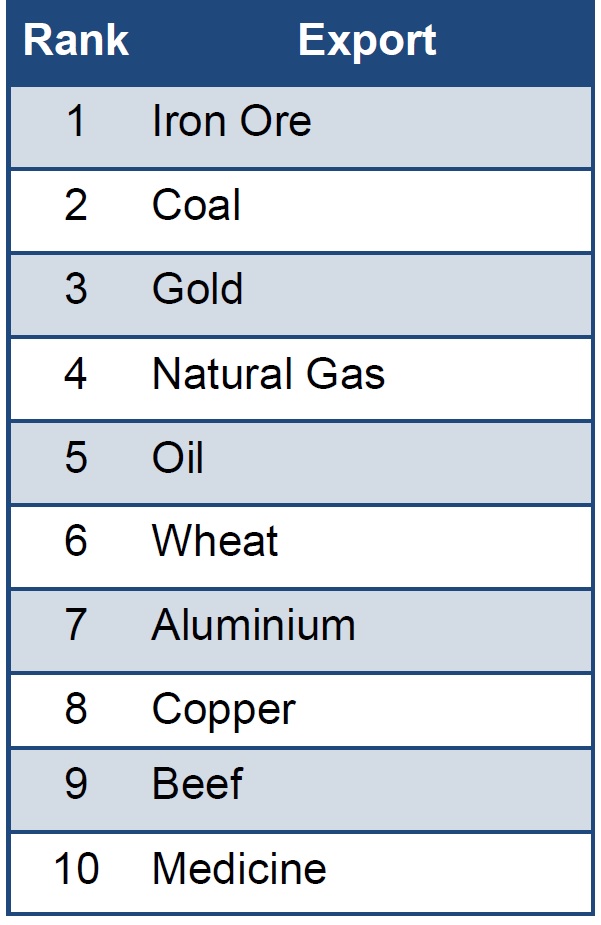
An example is of these two export tables. One was given to Year 9 students who were reading at a primary school level, the other to those at or just below stage level:

diff 2diff

Note: I did six revisions of the readability of the export table, to change headings, simplify commodities, exclude the %’s traded, and the font.

Sometimes, this is time-consuming and often hard, so why bother?

I wrote this in a recent education assignment:

Differentiation requires learning objectives for all students to be the same, but ensuring tasks are tailored to meet the needs of individual students so that each have the opportunity to engage and learn.

What I really wanted to write was something far deeper and less secular.

The only thing that Christ treats equally is his love of people and hatred of sin. Jesus was sent to save the sick, not to call the righteous (Mark 2:17). Christ also treated those who were downtrodden with an unyielding compassion regardless of who was watching (Luke 7:37-50).

Although Christ’s love is far more pure, constant and unconditional that anything I can offer; my students are equal human beings who deserve me to care about them, however, I didn’t become a teacher to sit and watch students struggle when I could easily do something about it. I choose to discriminate my pedagogy so that a child who may fall into the cracks of the education system can achieve, even if it means another child’s worksheet hasn’t been read seventeen times for readability when they don’t need that treatment.

I also wrote this in the same assignment:

This [equity] is contrary to current discourse which requires teachers to be competent experts who are measured on the basis of standardized tests.

It is easy to forget equity when a standardized test like NAPLAN or an exam measures your ability to teach well. When differentiation is time-consuming and almost irrelevant to the national assessment of education, why use your time if the student isn’t even going to be able to read the question on the HSC test paper?

I wrote this:

That is, realizing how to cater for students is a life-long process, and I will not always be the expert, but that my praxis [way you teach] will be constantly reinvented.


What I meant was:

As a Christian, we are called to emulate the love and fruits of the Spirit that Jesus so awesomely displays to the world.

But the fruit of the Spirit is love, joy, peace, forbearance, kindness, goodness, faithfulness, gentleness and self-control. Against such things there is no law. Those who belong to Christ Jesus have crucified the flesh with its passions and desires. Since we live by the Spirit, let us keep in step with the Spirit. Let us not become conceited, provoking and envying each other. ~ Galatians 5:22-26

Sure, a teacher can’t be expected to fix the world– it’s infinitely filled with brokenness, and almost every student will be marred by this (#Jesus can fix all: Luke 18:27; Job 42:2; Jeremiah 32:17).

Yet if I’m faced with the decision to have a two hour nap on a Friday afternoon, or change all my slides to black and white, so that the student I just found out was colour blind can read the explanations, notes and instructions; actual kindness demands me to forego the nap. Or, despite the great desire to discipline the student who stands outside the classroom he’s just been kicked out of whilst banging on the door, screaming to be let back in; self-control reminds me he has an additional learning need, where he can’t draw the connection between being punished (in this way) and his behaviour so I sit him down, ask him why he’s outside, what he should have done then explain it’s fair to be outside.


Short answer: Equity. I think it matters. Jesus.


Internship

Existential Crisis: Part One

images (2)

It’s less than a month till internship begins, and I’ve already had my first pre-term freak out. Last Friday, I came home from meeting with my CTs (cooperating teachers), aka the people who control my placement fate with the click of their mouse, and spent the twenty minutes in traffic as well as the two days following worrying that I was in the wrong degree.

Now after nearly four years of “fun” university times and a growing HECS debt you would think I’d be sure. However, last year, I was sitting in one of my education classes googling a social work transfer because I was certain I would screw up some poor kid’s education. In second year, I cried the first weekend of placement thinking I was going to be a terrible teacher. The first day of teaching in third year, I nearly broke down when my CT gave me mostly positive feedback because I was so sure I’d have blank stares from pubescent teens.

Most of my worry is borne from fear that I’m academically gifted at “knowing” education, rather than able to practically apply those skills. The fancy education terms for that is theory versus pedagogy, with the combination of the two being called praxis (see what I mean?). And the spacing between bouts of placement is so large that regardless of how poor or well I performed, I begin to doubt my ability to actually teach.

So how do I deal with such huge doubts about a massive milestone such as lifetime career?

..Prayer and perspective..

Firstly, no matter whether I’m being a stress head over an assignment, work, eating well or placement; I try and put all those anxieties onto Christ:

Do not be anxious about anything, but in every situation, by prayer and petition, with thanksgiving, present your requests to God.

~Philippians 4:6

 Don’t get me wrong, this is hard, and sometimes it’s not until I’m laying awake at 3 am with my brain churning that I actually do this. This is why I have this passage written above my planner on my door, I’m reminded that in every situation God has power–to comfort, to take away and to teach in the face of anxieties. Through His son we’ve been given this amazing relationship where our Father in heaven will listen (Romans 5:1-9; 1 Chronicles 5:20; Psalm 102:17) . He’s the perfect shoulder to cry on, and I know he will always be listening.

Secondly, PERSPECTIVE. God has predestined a life for me. He knew me before I was formed in my mother’s womb (Jeremiah 1:5). This guy knows what He is going to use me for whether it be a teacher, or a pauper on the street. Not only this, but He’s already given me a future, so much bigger than any career I end up in (SPOILER ALERT: eternal life). The crux of knowing this, is it requires a deep trust, which is hard when you’ve spent years focusing on “what I’m going to be when I grow up.” This is why praying is essential. It’s hard to trust when you aren’t willing to share.

It’s safe to say I’m over the “existential crisis” of last weekend after sitting down and being reminded of this (again) in Ecclesiastes (Chapter 1-12) where God is ever present but forever trustworthy in the face of worldly pursuits like my degree and career as a teacher. I’m hoping that I can latch on and continue embracing perspective during internship especially when the craziness reaches its roller-coaster lows.

Internship

Education in Living Water

Hi there!

My name is Emma, and I’ve seemingly managed to listen to a late night brain fart and join the blogging trend. Now what was I thinking, joining the hipster fad of social media story telling?

In just under a month I’ll be embarking on the wonderful (if slightly scary) journey of my final year internship for high school teaching. In the past, I’ve struggled to focus on the sovereignty of Christ in my teaching career. I tend to treat placements as an okay time to slack off from my relationship with Jesus, as long as I ‘show’ him in my classroom. Not only is this pretty immature, there is a great risk as I jump into an entire school term rather than a measly few weeks. I hope by documenting the ins and outs over the next few months will encourage me to contemplate Christ more in the midst of stress, planning and tears.

So why the name “Education in Living Water”?

Well, I hope that my teaching career will always be rooted in the response to Jesus’s sacrifice on the cross, however, I feel that internship will offer new (terrifying), and exciting chances to engage and grow in my relationship with Christ; provided I don’t take the lazy path away, but rather the one God calls us to in Romans 12:2:

Do not be conformed to this world, but be transformed by the renewal of your mind, that by testing you may discern what is the will of God, what is good and acceptable and perfect.

~Romans 12:2

Here’s to that.