

Relationships, Social

Mental Illness & Christians

Mental illness is a topic of conversation fraught with many taboos, misunderstandings, and uncertainties. Sometimes we presume when we shouldn’t, don’t ask questions when we should and stay silent when we need to speak.

When I was in my second year of uni, I remember a conversation that I had at a Christian weekend away where we began talking about mental illness. A friend mentioned that when they started struggling someone told them that all they needed to do was remember Jesus loved them, because they had forgotten Him. To me, it seemed absurd that this was the practical spiritual advice that was offered. It relied on the notion that the source of the person’s ill health was them forgetting Jesus and that had made them “sad” with life.

The above attitude shows a pretty prevalent view of mental illness in the Christian community, whereby there is a believed causal link between mental illness and someone’s relationship with God. Research actually shows that between 30% – 45% of Christians with a mental illness have been told their illness was a result of personal sin or a lack of faithfulness. This is concerning, given most Christians who are struggling with their mental health actually first seek assistance from their church community.

I think the above attitude is just the Christianised version of the secular world’s view that people just need to be stronger, that it’s a problem brought onto by themselves. Buck up and stop whining.

According to the Bible, the world is overcome by depravity caused by sin. Sin isn’t just a thing that comes and goes in the world but is always present in it and in us. This means, much like a cold, our bodies can be subject to mental illness – it is a result of a depraved world rather than the sinful behaviour of a single person.

For we know that the whole creation has been groaning together in the pains of childbirth until now. And not only the creation, but we ourselves, who have the firstfruits of the Spirit, groan inwardly as we wait eagerly for adoption as sons, the redemption of our bodies. – Romans 8:22-23

Knowing this shapes our response to people who have a mental illness. It forces us to acknowledge that mental illness is a symptomology of the world rather than a symptom of someone’s sin. This means that it’s not just a spiritual issue but a physical one as well. We should look to actively encourage people experiencing mental health issues to be seeking the appropriate support and care.

If you keep my commands, you will remain in my love, just as I have kept my Father’s commands and remain in his love. I have told you this so that my joy may be in you and that your joy may be complete. My command is this: Love each other as I have loved you. Greater love has no one than this: to lay down one’s life for one’s friends. – John 15:10-13

However, an important thing to remember is that although mental illness isn’t caused by sin, it can lead people into the temptation of sin. When things are rubbish it is easier to do things we’d normally veer away from, and to veer away from things we’d normally do. We fall out of good habits into bad ones. Seek to balance practical care with encouraging faithfulness.

How low the spirits of good and brave men will sometimes sink. Under the influence of certain disorders everything will wear a somber aspect, and the heart will dive into the profoundest deeps of misery. It is all very well for those who are in robust health and full of spirits to blame those whose lives are sicklied over with the pale cast of melancholy, but the evil is as real as a gaping wound, and all the more hard to bear because it lies so much in the region of the soul that to the inexperienced it appears to be a mere matter of fancy and diseased imagination. Reader, never ridicule the [depressed]; their pain is real. Though much of the evil lies in the imagination, it is not imaginary. – Charles Spurgeon


Social

Protecting Life & The Other Side

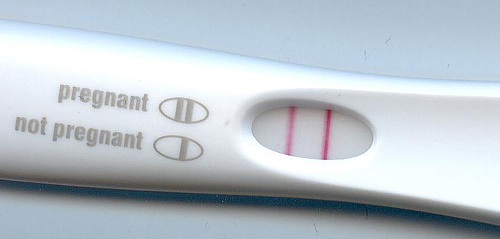
When you argue for the protection of unborn children, what else do you argue for?

Do you argue with one eye open to the Christian view of life and the other blind to the realities of the other side?

The Christian View of Life

To be pro-life means that all human life is worthy of protection at all stages of development. The argument for abortion relies on the notion that an unborn child is not separate from the mother, so therefore, the mother should have the right to decide. This is to do with personhood.

So, when does a human become a unique individual?

As Christians we believe that life starts from conception and that all people bear the image of God, that all are a part of God’s creation (Genesis 1:26-27). Man, child and woman alike. In fact, God knows His creation so intimately and deeply as He knitted us together in the womb.

“For you created my inmost being; you knit me together in my mother’s womb.” – Psalm 139: 13

We see a fuller picture of this in Job:

“Your hands shaped me and made me. Will you now turn and destroy me? Remember that you molded me like clay. Will you now turn me to dust again? Did you not pour me out like milk and curdle me like cheese, clothe me with skin and flesh and knit me together with bones and sinews? You gave me life and showed me kindness, and in your providence watched over my spirit.” – Job 10: 8-12

He even tells Jeremiah that He had great plans for him before he was born:

“Before I formed you in the womb I knew you, before you were born I set you apart; I appointed you as a prophet to the nations.” – Jeremiah 1:5

The Bible clearly tells us that humans were known personally by God as unborn children.

Beyond the Bible, science tells us that the human embryo contains a unique genetic code – everything to make a human. All the genetic characteristics of a child are already present before a human shape starts to form.

The Bible and science tells us that we are fearfully and wonderfully made before birth. 

This means that to terminate a pregnancy is to end the life of another; something which is abundantly against God’s will (Deuteronomy 5:17).

The Other Side

However, having a child is not always easy, desirable or expected. It is a decision that impacts the immediate future of a woman. For nine months she’ll carry a child that she may not want. Surely she deserves the right to decide whether she is to do this?

The pro-choice belief is that a woman should have the right to decide what happens to her body, including the genetic material of an unborn child. This isn’t a wild notion. Often the people who are arguing to end abortions aren’t in the position of being pregnant. Babies are effort – ask any parent.

Why would someone have an abortion?

A survey in South Australia outlined the main reasons why women chose to terminate their pregnancies. The top four were:

  • Pregnancy would jeopardise future
  • Could not cope
  • My right to choose
  • Can’t afford a baby

Some women end up having abortions for medical reasons and as the result of sexual assaults. However, most terminations occur based on the personal circumstances of the mother.

The Right Response

It may seem selfish that a woman chooses to end a pregnancy through an abortion for some of the listed reasons above; but as Christians we aren’t really in the position to judge someone’s heart or motives.

“Do not judge, or you too will be judged. For in the same way you judge others, you will be judged, and with the measure you use, it will be measured to you. “Why do you look at the speck of sawdust in your brother’s eye and pay no attention to the plank in your own eye? How can you say to your brother, ‘Let me take the speck out of your eye,’ when all the time there is a plank in your own eye?” – Matthew 7: 1-5

What we do need to think of is the other side with compassion. If we are going to be arguing against abortions, we need to be fighting for services and supports that assist women during and after pregnancy, not shutting them down. This includes pushing for subsidised pre- and post-natal care, counselling, and medical appointments. As well as fighting for supports for abortion alternatives, protection of work status and flexible education programs with subsidised child care facilities.

Jesus made sure the crowds who came out to see him were fed. He healed the physically sick and showed kindness to some questionable characters. He went teaching but loved those who needed it at the same time through food, care and company. He cared for them spiritually, emotionally and physically. We should do the same.

Jesus went through all the towns and villages, teaching in their synagogues, proclaiming the good news of the kingdom and healing every disease and sickness. When he saw the crowds, he had compassion on them, because they were harassed and helpless, like sheep without a shepherd. – Matthew 9:35-38

If we want to encourage people to consider alternatives, we need to also compassionately fight to have services that will help them if they choose not to abort. Changing the status quo for unwanted pregnancies won’t change without a shift in the support for women who decide to carry a child to term. We cannot do one without the other.

Don’t let self-righteous debates cloud your vision. Fight to protect the unborn and the physical needs of those unprepared for a child… at the SAME time. Acknowledge the plight of those in the position of an unwanted pregnancy and what needs to be done to help them. Fight to protect human life with eyes wide open to the both sides.


Social

The Argument Against Feminism

A great myth that is often spread within the church is that feminism is a bad thing. This is based on two things – the over publicised aggressive “feminism” and arguing its failure to Christianity due to legal changes prompted by the liberation movement in the 1970s, whereby the Matrimonial Causes Act was replaced with No-Fault Divorce in 1975. What comes out of this deridement of change is an overwhelming argument that feminism causes more harm to Christianity, than good.

Matrimonial Causes vs. No-Fault Divorce

Under the Matrimonal Causes Act 1959, there were 14 different types of reasons that a divorce would be approved by a court. However, a spouse had to be proven at fault for the marriage breakdown. Who was the adulterer? Who was the drunk? Who was insane?

In reality, to prove someone was at fault a solicitor and/or private investigator needed to be hired. Divorce was an actual legal battle, with plenty of finger pointing. The nature of Matrimonial Causes meant that divorce was harder.

So why did feminism come in and make divorce rates sky rocket?

Women prior to the 1980s, and particularly mid-1970s, did not maintain financial independence once they were married. This meant that if a divorce was to occur, and cause was to be proven, a woman could not do that with no money. Often they were shown as the damaging party. But they got their divorce right? In some cases, yet the one usually found at fault forfeited much, if not all, their rights to children, assets and reputation.

No Fault Divorce removed the need to prove a specific cause. It alleviated the litigation in courts and the demand to point fingers.

The Damage

Feminism was a catalyst for increasing divorce rates, there’s no argument there. However, laying waste to a movement that aims to bring equality between the sexes because of one turning point for divorce, ignores all the good that the movement has achieved.

By telling young men and women that you don’t like feminism, tells them you don’t value anything else the movement has achieved nor the implications for if the Matrimonial Causes Act had continued. The vote, equal wages, marital rape and discrimination were still issues under a hundred years ago (and still are for some people/places).

Whenever something comes along with a ‘feminist spin,’ and it challenges the status quo for Christian men and women, the echoing remnants of being told that someone who teaches them doesn’t agree with feminism, justifies them ignoring the rebuke of maintaining the status quo.

Reminder

Men and women were created equal (Genesis 1:27), however, it was screwed when sin entered the world at The Fall (Genesis 3).

And the Lord God said, “The man has now become like one of us, knowing good and evil. He must not be allowed to reach out his hand and take also from the tree of life and eat, and live forever.”So the Lord God banished him from the Garden of Eden to work the ground from which he had been taken. – Genesis 3: 21-22

The relationship of the world, men and women, is not what it is supposed to be. Perfection was in Eden. Feminism is simply a tool of the world to achieve something that will never be fully attained in this life. Yet, we should not take lightly the implications of treating feminism with emnity.

Relationships, Social

Christian Feminism

The Bible is all about a bunch of dudes telling women to cover their heads and be silent…

Unshaven armpits, bald heads and man-haters…

What is Feminism?

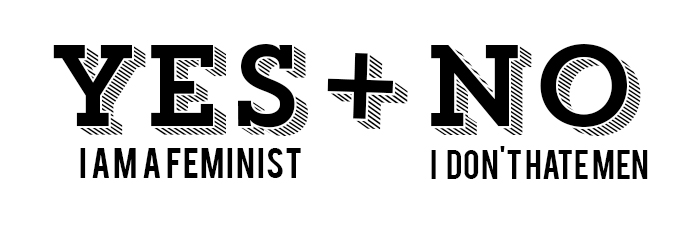
Feminism is not about a group of jaded, spinster women who hate men with body hair galore and undercuts.

Feminism is the fundamental belief that men and women are equal. The movement itself was borne as a response to inequalities that, for the most part, women experienced compared to their male counterparts.

Some examples are:

  1. The inability to vote
  2. Requirement to leave the workforce once married
  3. Inability to control their own finances once married
  4. Perceptions of single women who had sex versus single men who had sex
  5. Unequal pay for the same work
  6. Marital rape and domestic abuse
  7. A real woman was a domesticated house-wife
  8. Incapable of “logical” professions such as doctors, lawyers, bankers, businessmen etc.

There are also ‘waves’ of feminism. That is, different stages of the movement that focus on areas of inequality. Note: Some of these deal with direct inequality whilst others may deal with institutional inequality.

  1. First-wave: 19th and early 20th century – focused on legal issues, primarily suffrage
  2. Second-wave: 1960s – 1980s – focus on sexuality, family, the workplace, reproductive rights, de facto inequalities, official legal inequalities
  3. Third-wave: 1990s – 2008 – intersectional feminism (the experience of inequality will differ across ethnicities, nationalities, religions, colors and cultural backgrounds)
  4. Fourth-wave: 2008 – present – increased focus on intersectionality including trans-inclusion

I am a Christian Feminist

How can this be? Well, I believe that men and women are created equal. This is not contrary to the Bible nor to the ideals of feminism.

Both Adam and Eve were created in the image of God. Just as the first man and woman were equally in the image of God, so are men and women now.

So God created mankind in his own image, in the image of God he created them; male and female he created them. – Genesis 1:27

However, far more radical to feminism is my belief that men and women were created equal but different. Equality does not mean doing the same thing. We are designed to have different functions but with one purpose.

Adam was given the responsibility to lead, whilst Eve was given the responsibility to be the helper. Both functions were to glorify God, both with equal weight and both with equal worth.

The Lord God took the man and put him in the garden of Eden to work it and keep it. – Genesis 2: 15

But for Adam no suitable helper was found…. Then the Lord God made a woman from the rib he had taken out of the man, and he brought her to the man. – Genesis 2: 20 -22

What Equal but Different does NOT mean..

  • That being a “helper” is of less significance than being a “leader.” The glorification of leaders over helpers is a human idea. In the Bible, there is none that can fit the role that Eve fills, so God creates her. Without Eve, Adam could not lead. Without Adam, Eve could not help.
  • That women are incapable of leading. There are particular circumstances of the design of men and women, where women should not lead such as teaching men the Bible or headship in a marriage; however, for most positions of leadership, that don’t fit the two already described, women are more than capable of leading armies, governments and other groups. Both Adam and Eve are placed as rulers over the animals in the garden. Eve wasn’t the deputy, she was the co-ruler.
  • That women’s opinions are worthless. Just because men are given the function of leader does not mean they get to ignore women. Equal means that a woman’s opinion is of equal worth to that of a man’s. Adam cherishes Eve as his own flesh after she is created by God.
  • That men are workers and women are stay-at-home wives and/or mums. Women as helper does not mean that they should clean up after their husbands and do everything for them. Women are not servants and subservient; remember Adam loved Eve as himself which means he sees her value too.

Feminism is not a dirty idea, where women seek to “rule” over men nor where men are the scum between our toes. It’s essence and creation is based on equality of the sexes; an equality that is clearly acknowledged in the Bible.

Stay tuned for the follow-up posts in the next few days.